
When A Hurricane Delays Process Service- Learn how process service Pensacola FL can help locate displaced individuals.
Legal deadlines do not always stop because a storm has disrupted someone’s life.
A person who lived at one address before a hurricane may suddenly be staying with relatives, living in a hotel, temporarily relocating to another city, working from a different location, or moving permanently because their home is no longer usable.
That can create a serious problem when legal documents still need to be served.
At Sunbelt Investigative Services Group, we provide professional process service Pensacola FL attorneys, businesses, landlords, organizations, and private clients can rely on when a person becomes more difficult to locate.
After a hurricane, the address you were given may still exist on paper.
That does not necessarily mean the person is still there.
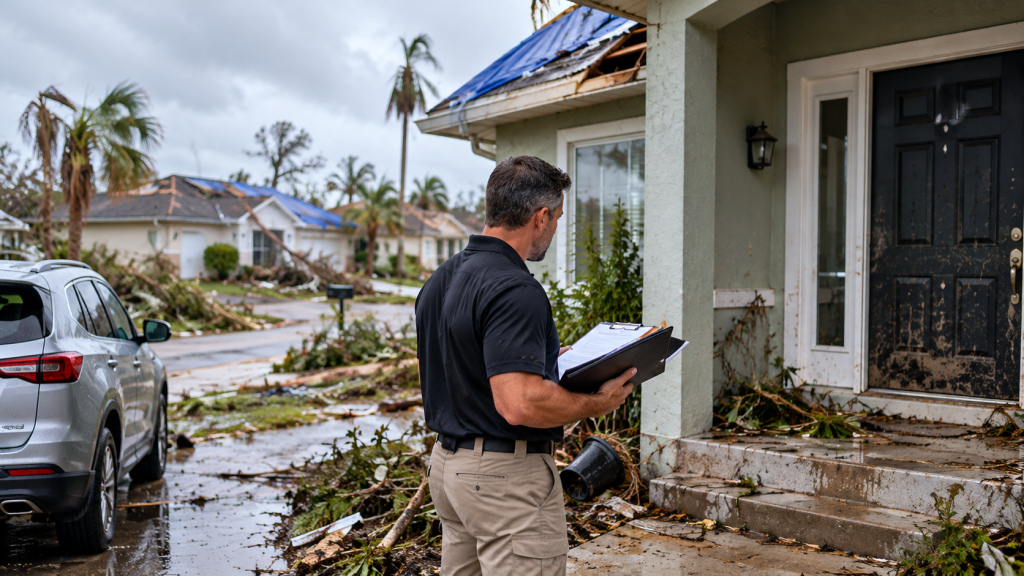
Under normal conditions, process service may begin with a known residential or business address.
After a hurricane, that information can become outdated very quickly.
A person may temporarily relocate because of:
Even when someone intends to return, they may be gone long enough to make ordinary service attempts unsuccessful.
This is why post-hurricane process service may require more than simply visiting the address listed in the case file.
One of the most frustrating situations is when the address is technically correct.
The person still owns or rents the property.
Mail may still go there.
Records may still list it as their residence.
But the person may be staying somewhere else.
That creates an important distinction:
A valid address is not always a useful service location.
A professional process server may need to determine whether the subject is:
Understanding that difference helps determine the next step.
Address data is never perfect.
After a major storm, it can become even less reliable.
Public records may not immediately reflect temporary relocation. Utility information may change. Businesses may close temporarily. Postal forwarding may not be available to investigators. People may leave the area without updating official records.
That means investigators may need to compare multiple sources rather than relying on one database.
Location efforts may involve:
The goal is to develop current, usable leads.
When a person cannot be found at the address provided, skip tracing may help.
Skip tracing is the process of using lawful investigative resources to locate someone whose current whereabouts are uncertain.
After a hurricane, skip tracing may help identify:
It does not guarantee immediate location.
But it can help turn an outdated address into a more focused search.
Even if the person is no longer living at the location, the property itself may provide clues.
A process server may observe:
These observations should be documented carefully.
A failed service attempt can still provide valuable information about what should happen next.
In some situations, lawful field inquiries may help establish whether someone has relocated.
A neighbor may know the person is staying with relatives.
A property manager may know the tenant moved.
A business owner may know an employee is working from another location.
A contractor may know when the homeowner usually returns.
These leads should be treated carefully and professionally.
The objective is not to disclose sensitive legal information unnecessarily.
It is simply to determine where the subject may now be found.
Not every unsuccessful post-hurricane service attempt is caused by displacement.
Sometimes, the person knows legal documents are coming.
Storm conditions can make avoidance easier.
Someone may claim to have relocated when they are still returning regularly. They may move between locations. They may stay with family but continue using the original home. They may attempt to take advantage of the confusion caused by the storm.
That is why process servers should document patterns.
Repeated observations may help distinguish between:
The goal is not to assume avoidance.
The goal is to establish facts.
Daily routines can change dramatically during storm recovery.
A person who normally works from 8:00 a.m. to 5:00 p.m. may now be at home during the day.
Someone staying elsewhere may return only in the morning to check the property.
A business owner may operate from a temporary location.
A contractor may know when the property owner is present.
Successful service may require different timing than usual.
Attempts may need to occur:
Strategic timing can become extremely important.
Post-hurricane conditions can create unusual service circumstances.
That makes documentation especially important.
A professional process server should clearly document:
If service is later questioned, good documentation helps show what efforts were made.
It also helps attorneys decide whether additional attempts, skip tracing, or another method should be considered.
A storm may disrupt normal routines, but legal matters can still have deadlines.
Depending on the case, delays in service can affect:
That is why attorneys and clients should avoid assuming service can simply wait indefinitely.
The earlier a difficult assignment is identified, the more options there may be.
When storm conditions affect service, communication becomes critical.
Attorneys need to know:
Silence creates uncertainty.
Clear updates help the legal team make informed decisions.
At Sunbelt Investigative Services Group, process service is approached with persistence, documentation, and investigative support when necessary.
We assist with:
When hurricane conditions make service more difficult, our goal is to help determine where the person can realistically be found.
The process server may need updated address information, skip tracing, or additional field investigation to locate the person.
Potentially, depending on the circumstances and applicable service requirements. The attorney or requesting party should confirm the appropriate method of service.
That should be documented. Additional research may be necessary to determine where the person is staying.
Yes. Skip tracing can help develop updated address, phone, employment, and associate information when a subject has relocated.
Yes. Sunbelt Investigative Services Group provides process service Pensacola FL clients can rely on, including difficult assignments and investigative support when appropriate.
You should consider hiring a private investigator when important decisions depend on facts you do not currently have, or when you need professional help gathering evidence, locating people, verifying claims, or documenting activity.
Yes. Private investigators frequently support attorneys with witness location, witness statements, surveillance, criminal defense investigations, civil investigations, asset searches, and litigation support.
Yes. Private investigators can assist businesses with employee theft, fraud, workplace misconduct, vendor issues, background investigations, and corporate risk concerns.
Yes. Professional investigators handle inquiries and investigations with discretion and confidentiality.
No. A confidential consultation can help determine which investigative service best fits your situation.
Some questions are too important to leave unanswered.
What Happens When Someone Moves After A Hurricane And Still Needs To Be Served?
The answer is usually more investigation.
A damaged home, temporary relocation, closed business, or outdated address can make ordinary process service much harder.
But difficult does not automatically mean impossible.
If you need process service Pensacola FL during or after hurricane conditions, Sunbelt Investigative Services Group can help with address verification, skip tracing, documented service attempts, and professional follow-up.
Contact us today, and let’s work to keep your legal matter moving even when the circumstances have changed.
Contact us today for a confidential consultation and let’s discuss the right investigative approach for your situation.