
Can You Get A Document Notarized Online In Florida? Learn how a Notary Public Pensacola handles remote notarization and identity checks.
Imagine needing an important document notarized, but your schedule is already full. You may be traveling for work, living in another state, recovering from an illness, managing a business, or trying to complete paperwork before a deadline. The document is ready, but finding the time to visit a notary’s office feels like another problem you do not need.
What if you could complete the notarization without leaving your home?
Yes, Florida allows remote online notarization, commonly called RON. However, the process involves more than uploading a document, joining a regular video call, and watching someone apply a digital stamp. Florida has specific requirements governing who can perform online notarizations, how identities must be verified, what technology must be used, and how the transaction must be documented.
For anyone searching for a Notary Public Pensacola, understanding these requirements can help you determine whether online notarization is appropriate or whether a traditional in-person appointment would be better.
At Sunbelt Investigative Services Group, we understand how important accurate documentation can be for legal matters, business transactions, financial agreements, and personal affairs. Whether you are considering a conventional notary appointment or an authorized online service, choosing the correct process before signing can help prevent unnecessary complications.
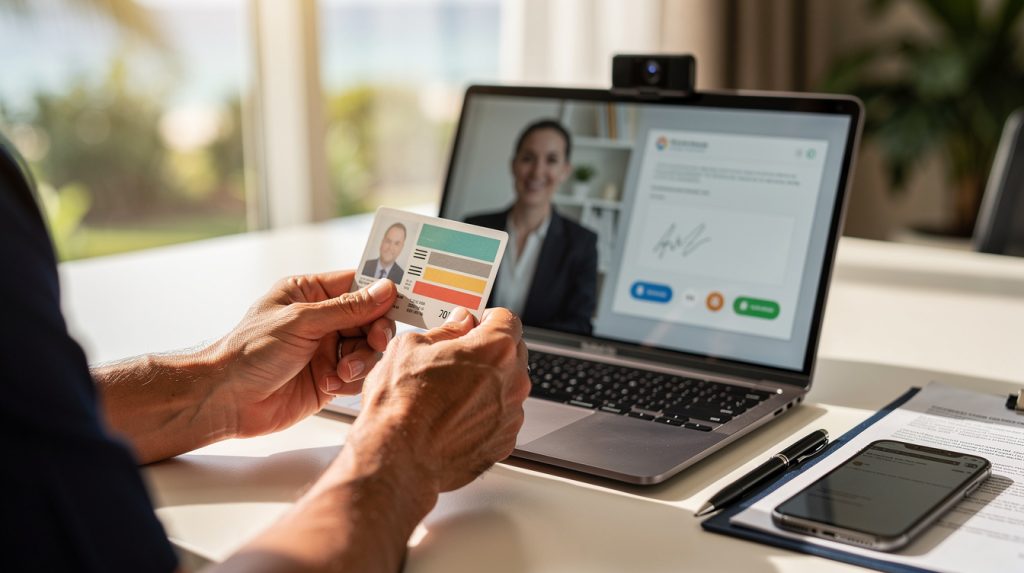
Florida permits qualified notaries to perform remote online notarizations under Chapter 117, Part II of the Florida Statutes. This means an authorized online notary can complete certain notarial acts using approved audio-video communication technology rather than requiring the signer to appear physically in the same room.
However, there is an important distinction between being a commissioned Florida notary and being registered to perform remote online notarizations.
Not every Florida notary is automatically authorized to notarize documents online.
A notary who wants to provide remote online notarization must complete the applicable registration and training requirements, use compliant technology, and meet additional statutory requirements. The Florida Department of State oversees the registration process for remote online notaries.
This distinction matters because a client may assume that any notary offering document services can simply switch to a video appointment. In reality, authorization and technology requirements must be satisfied before a valid remote online notarization can take place.
If you’re considering online notarization, confirm that the provider is properly authorized to perform the service rather than assuming an ordinary video meeting will be sufficient.
Remote online notarization is a process in which a qualified notary performs a notarial act using electronic documents and approved real-time audio-video communication technology.
During the appointment, the signer and notary can see and hear one another through a secure electronic system. The platform supports the required identification procedures, document review, electronic signatures, and application of the notary’s electronic signature and seal.
Florida Statute 117.265 establishes detailed procedures for online notarizations, including identity confirmation and recording of the audio-video session.
Unlike ordinary document scanning, RON is designed to create an official electronic notarization with supporting verification and recordkeeping procedures.
That means an electronically notarized document is not simply a PDF with an image of a traditional stamp added to it. The process must satisfy Florida’s legal requirements for an online notarial act.
Although the exact user experience varies depending on the authorized platform, the general process follows several important stages.
First, the signer provides the document requiring notarization. The provider reviews whether the document and requested notarial act are appropriate for the online process. The signer may then receive instructions for accessing the secure platform, preparing identification, and completing any required preliminary information.
Next comes identity verification. The signer may be required to present an accepted government-issued identification credential remotely. The platform may analyze the credential and require additional identity-proofing steps, such as knowledge-based authentication or another legally compliant verification method.
Once the required checks are completed, the signer enters a live audio-video session with the authorized online notary. The notary confirms the appropriate information, completes the required notarial procedure, and applies the electronic signature and seal.
The session is recorded as required by Florida law, and the resulting electronic document can be made available through the provider’s process.
The goal is to deliver a legally compliant notarization without requiring the signer and online notary to occupy the same physical location.
One of the biggest misconceptions about remote notarization is that it can be completed through any video-calling application.
Someone may believe that because they can see a notary on Zoom, FaceTime, or another video platform, the notary can simply watch them sign and email back a stamped document.
That is not how Florida’s remote online notarization framework works.
Florida law requires compliant audio-video technology and specified identity-verification procedures. Online notaries must also follow requirements involving electronic certificates, security, recordings, and recordkeeping.
An ordinary video call does not automatically provide these protections.
For example, a standard video meeting may not include the credential analysis and identity-proofing functions required for a signer who is not personally known to the notary. It may also lack the required electronic journal, secure recording arrangements, and compliant electronic seal.
A properly authorized online notarization is a regulated notarial service, not an informal video appointment.
Yes, under Florida’s online notarization framework, a person signing a document does not necessarily need to be physically located in Florida.
Florida Statute 117.265 allows an authorized Florida online notary who is physically located within the state to perform an online notarization even when the signer or witnesses are located elsewhere.
This can be particularly useful when someone has moved out of Florida but still needs to complete documents involving a Florida property, business, legal matter, or personal transaction.
For example, someone who previously lived in Pensacola may now reside in Georgia or Texas. They may still need to sign a Florida-related document but may not be able to travel back for an appointment.
Remote online notarization may offer a practical option, provided the document is suitable and the applicable requirements are satisfied.
When the signer is outside Florida, state law also requires the online notary to confirm that the signer wants the notarial act performed by a Florida notary under Florida law.
However, clients should still confirm that the receiving institution or jurisdiction will accept the resulting electronic document.
In certain circumstances, yes. Florida law does not generally require the principal or witnesses to be physically located within the state when an authorized Florida online notary performs the notarization.
This can benefit individuals traveling internationally, living abroad, or handling documents connected to property and business interests in Florida.
However, additional practical considerations may arise.
The signer must still satisfy the required identity-verification procedures. The chosen technology must function properly, and the intended recipient must be willing and legally able to accept the electronic document.
Some international transactions may also require an apostille, authentication, local legal advice, or other documentation.
For that reason, people living abroad should confirm the receiving organization’s requirements before paying for an online notarization.
Identity verification is one of the most important parts of remote online notarization.
During a traditional appointment, a notary may physically examine your identification card or passport. Online notarization requires a different approach because the identification is presented remotely.
Under Florida Statute 117.265, an online notary must confirm the signer’s identity through personal knowledge or a compliant combination of remote presentation of a government-issued identification credential, credential analysis, and identity proofing.
Credential analysis helps assess the identification document presented remotely. Identity proofing provides additional confirmation of the signer’s identity and may involve knowledge-based authentication or another compliant method.
If the required procedures cannot establish identity, the online notarization cannot proceed.
This is important because convenient access should never mean weaker identity verification. Electronic notarization still carries responsibilities involving the authenticity of signatures and the prevention of improper transactions.
Failing an online identity check does not automatically mean someone is attempting fraud.
A legitimate signer may encounter problems because their identification cannot be analyzed successfully, the information supplied does not match available records, or the identity-proofing system lacks sufficient information.
People who recently moved, changed names, or have limited records may sometimes encounter verification difficulties.
Florida law does not allow the online notary simply to ignore the problem when required verification cannot be completed.
Instead, the signer may need to resolve the issue, follow an appropriate verification procedure supported by the provider, or arrange an in-person appointment.
This is another reason clients should avoid leaving important notarizations until the final hours before a deadline.
Florida authorizes online notaries to perform many of the notarial functions ordinarily permitted under its notary laws, subject to the specific requirements and exceptions that apply.
Depending on the document and receiving organization’s requirements, remote notarization may be suitable for certain affidavits, acknowledgments, sworn statements, authorizations, business documents, and other electronic records.
However, not every document is appropriate for every online notarization platform.
Some transactions may have additional witness requirements, special statutory restrictions, recording requirements, or instructions from the receiving institution. Documents involving wills, certain estate-planning matters, or vulnerable adults can be subject to additional protections and should be evaluated carefully.
The safest approach is to confirm the document’s requirements before scheduling the appointment.
An authorized online notary can explain the notarial process, but a non-attorney notary should not select legal documents or provide legal advice about the underlying transaction.
Florida’s online notarization laws may allow qualifying power-of-attorney documents to be notarized remotely, but these transactions require particular care.
A power of attorney can give another person significant authority over financial, property, or personal matters. Depending on the document, additional execution and witness requirements may apply.
Florida also has special safeguards involving certain documents signed by vulnerable adults, including provisions that can affect the use of remote witnesses.
Therefore, the fact that a document can be notarized electronically does not automatically establish that every legal execution requirement has been satisfied.
Before proceeding, ask the attorney or organization preparing or receiving the power of attorney whether the intended online notarization method meets all applicable requirements.
Some documents require witnesses in addition to a notary.
Florida law provides procedures for supervising the witnessing of electronic records through authorized online notarization systems. These procedures can include requirements for witness identification, communication technology, recording, and confirmation of relevant information.
However, the rules are not identical for every type of document.
An online notary should not assume that adding two people to a video call automatically satisfies every witness requirement.
For documents involving property, estate planning, powers of attorney, or other legally significant transactions, the appropriate witness procedures should be confirmed in advance.
A document can be properly notarized yet still encounter problems if other required execution formalities were not followed.
An online notarization completed in accordance with Florida law is a legally recognized notarial act.
Florida Statute 117.265 provides the procedures governing online notarization, while other sections of Chapter 117 establish requirements involving authorization, electronic records, journals, and notarial certificates.
That legal recognition is important, but it should not be confused with guaranteed acceptance by every institution for every purpose.
A receiving organization may require a paper original, impose additional procedures, or operate under rules applicable to a different jurisdiction.
For instance, a document intended for a court, foreign authority, recording office, or financial institution may be subject to requirements beyond the notarization itself.
Therefore, the question should not be limited to whether online notarization is legal. Clients should also ask whether it is appropriate for the particular transaction and whether the recipient will accept it.
Florida Statute 117.275 allows an online notary public or the notary’s employer to charge no more than $25 for an online notarial act under the statute.
However, this limit does not govern every other service associated with a remote notarization. The law specifically distinguishes notarial fees from fees for other services, including those provided by remote online notarization technology providers.
As a result, the total amount charged through a particular online notarization platform may include additional permitted service fees.
Before starting an appointment, clients should review the complete pricing information rather than assuming the statutory notarial fee represents the entire transaction cost.
This is especially important when multiple signatures, witnesses, documents, or additional services are involved.
Yes. Florida law requires the online notary to record the two-way audio-video session involving the principal and participating witnesses.
Online notaries must also maintain secure electronic journals and comply with statutory record-retention requirements. Florida law generally requires the relevant electronic journal and recording records to be retained for at least ten years.
These requirements provide an additional record of the circumstances surrounding an online notarization.
The recording can help establish who appeared, how identity was confirmed, and what occurred during the session.
However, the existence of a recording does not mean the session is public. Access to records remains governed by applicable legal and statutory requirements.
Clients should use legitimate providers that handle sensitive personal information and recorded sessions through appropriate security procedures.
Remote online notarization incorporates several safeguards intended to reduce impersonation and improper transactions. These include required identity verification, credential analysis when applicable, real-time audio-video communication, recorded sessions, secure electronic journals, and electronic notarial certificates.
Those protections are significant, but no system eliminates every possible risk.
A dishonest individual may still attempt identity fraud, coercion, document manipulation, or misuse of personal information. Technology can also fail, and records may contain inaccuracies.
This is why Florida online notaries remain responsible for following applicable notary laws rather than relying entirely on a platform to make every decision.
The technology supports the notary’s official responsibilities. It does not replace professional judgment.
Neither option is automatically better for every situation.
Online notarization may be convenient for people who are traveling, working remotely, living outside Florida, or unable to visit a notary easily. It can eliminate travel time and allow the signer to complete an appropriate transaction electronically.
In-person notarization may be preferable when the document recipient requires an original paper document, when identity verification is easier face-to-face, when technology access is limited, or when the transaction involves complexities better handled through physical attendance.
Some clients also prefer the reassurance of meeting a notary directly and reviewing the paperwork in person.
The right choice depends on the document, the recipient’s requirements, the signer’s circumstances, and the type of notarial act required.
Even with the convenience of remote notarization, traditional appointments remain valuable.
A client may have a physical document that must be signed and submitted in its original form. Someone may lack a stable internet connection or have difficulty completing automated identity checks. A legal representative may need several individuals to sign documents at the same location.
Other clients simply want the process explained in person before an important document is signed.
For these reasons, local Notary Public Pensacola services continue to serve an important role alongside Florida’s online notarization framework.
A qualified local notary can help with appropriate in-person notarial acts while ensuring that the signer’s identity, personal appearance, document completeness, and other relevant requirements are addressed.
Many online notarization problems are preventable when signers prepare carefully.
One mistake is assuming that any document can be submitted without checking the receiving organization’s requirements. Another is beginning the process with identification that cannot satisfy the platform’s verification standards.
Technical issues can also create interruptions. Poor lighting may make identification difficult to analyze, while an unstable internet connection may interfere with the required audio-video communication.
Clients can improve their chances of a smooth appointment by confirming the document’s suitability, preparing qualifying identification, using a reliable device and internet connection, reviewing the provider’s instructions, and ensuring that every required participant is available.
Most importantly, avoid signing or modifying documents in a way that conflicts with the required notarial procedure.
Before paying for a remote notarization, it is worth confirming several practical details.
Is the notary authorized to perform remote online notarizations under Florida law?
Will the receiving organization accept the electronically notarized document?
Is the document suitable for the online notarization process?
Are additional witnesses or special execution requirements involved?
What identification and technology will be required?
What is the total cost, including permitted platform fees?
How will you receive the completed document?
These questions may seem simple, but they can prevent an otherwise successful notarization from becoming a paperwork problem later.
A notarization may be only one step in a much larger matter. It could involve a property transaction, business agreement, sworn statement, authorization, financial document, or legal proceeding.
When the paperwork is important, choosing an appropriate notarization method matters just as much as finding an available appointment.
Sunbelt Investigative Services Group provides professional notary services in Pensacola for clients who need assistance with suitable documents. Our broader legal-support background makes us familiar with the importance of accurate paperwork, confidentiality, proper identification, and professional handling of sensitive matters.
If you are considering remote notarization, confirm that your chosen provider is authorized for that service and that the receiving organization will accept the resulting document. If an in-person appointment is more appropriate, Sunbelt can assist with its available local notary services.
Yes. Florida authorizes qualified online notaries to perform remote online notarizations under Chapter 117, Part II of the Florida Statutes, subject to the applicable requirements.
Yes, in qualifying circumstances. An authorized Florida online notary generally must be physically located in Florida, but the signer may be elsewhere.
No. The notary must have the required authorization to perform remote online notarizations and use compliant technology. An ordinary video call is not automatically sufficient.
Florida law limits the online notarial-act fee charged by the online notary or the notary’s employer to $25, while separate permitted service or technology fees may apply.
An electronic notarial certificate and seal can be legally valid when used as part of a properly authorized and compliant online notarization.
You should consider hiring a private investigator when important decisions depend on facts you do not currently have, or when you need professional help gathering evidence, locating people, verifying claims, or documenting activity.
Yes. Private investigators frequently support attorneys with witness location, witness statements, surveillance, criminal defense investigations, civil investigations, asset searches, and litigation support.
Yes. Private investigators can assist businesses with employee theft, fraud, workplace misconduct, vendor issues, background investigations, and corporate risk concerns.
Yes. Professional investigators handle inquiries and investigations with discretion and confidentiality.
No. A confidential consultation can help determine which investigative service best fits your situation.
Some questions are too important to leave unanswered.
Can You Get A Document Notarized Online In Florida? Yes, and for many people it can be a useful alternative to visiting a notary in person. Florida’s remote online notarization framework allows qualifying documents to be notarized through approved technology, even when the signer and authorized Florida online notary are in different locations.
However, convenience does not eliminate the need for identity verification, proper documentation, lawful execution, and compliance with Florida’s notary requirements.
Before scheduling, make sure the document is suitable, the provider is authorized, and the receiving organization will accept the completed electronic record.
For professional Notary Public Pensacola services, contact Sunbelt Investigative Services Group at (850) 687-3510 to discuss your document and determine the available appointment options.
Contact us today for a confidential consultation and let’s discuss the right investigative approach for your situation.