
The Evidence Insurance Fraud Usually Cannot Hide Forever explains how insurance fraud Pensacola FL investigations uncover inconsistencies, patterns, and evidence.
Insurance fraud can look convincing.
The paperwork may appear complete. The story may sound believable. The injuries may seem difficult to question. The damage may look legitimate. The claimant may know exactly what to say.
But fraud has one problem:
It has to remain consistent.
That is where many questionable claims begin to fall apart.
A timeline does not match. A witness remembers something different. Social media shows activity that contradicts the claim. Surveillance documents behavior that was never supposed to happen. Property records tell a different story. Financial pressure creates motive. Previous claims reveal a pattern.
At Sunbelt Investigative Services Group, we provide professional insurance fraud Pensacola FL investigative support for insurance professionals, attorneys, businesses, and organizations that need facts before making expensive decisions.
Insurance fraud may hide behind paperwork, but evidence usually leaves a trail.
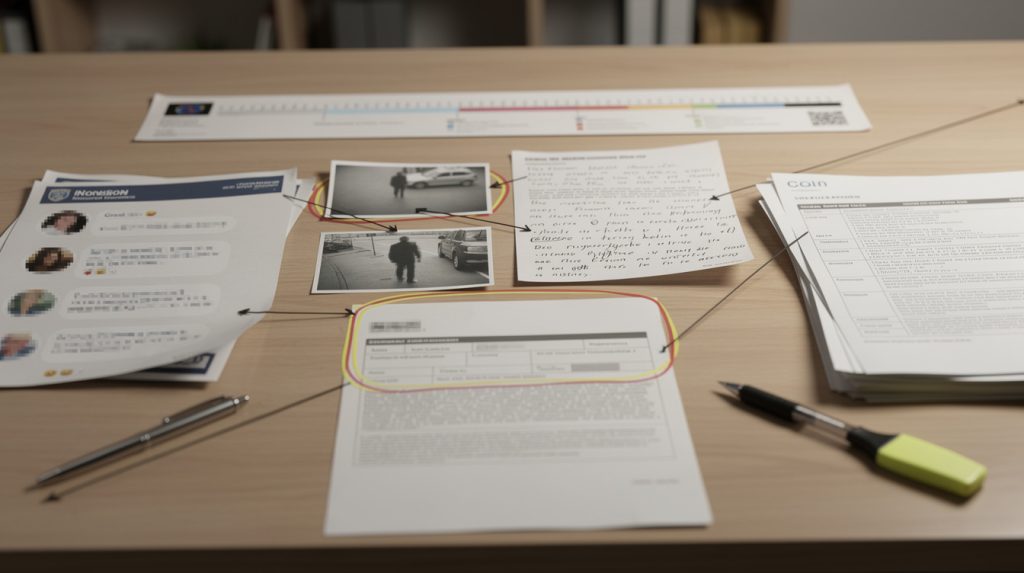
A claim can sound convincing.
But a claim is only one version of events.
The evidence may include:
If those sources support the claimant’s story, that matters.
If they repeatedly contradict it, that matters too.
The investigator’s job is not to decide the outcome before the investigation begins.
The job is to determine whether the available evidence supports the claim.
Fraud rarely announces itself.
It usually begins with something small.
A date changes.
The reported location is different.
The injury becomes more severe over time.
The damaged property does not appear consistent with the explanation.
A witness remembers something that does not fit the report.
One inconsistency may be an honest mistake.
Several may become a pattern.
Common red flags may include:
Red flags are not proof of fraud.
They are reasons to look more closely.
A claim file shows what someone reports.
Surveillance may show what they actually do.
That distinction can become important in cases involving physical limitations, disability, workers’ compensation, or personal injury claims.
Surveillance may document:
The goal is not to catch someone in a dramatic moment.
The goal is to document normal activity over time and compare that activity with the reported limitations.
Sometimes, the surveillance supports the claim.
Sometimes, it raises additional questions.
Both outcomes are useful.
People frequently document their own lives online.
They post:
Those posts can become relevant when they conflict with information submitted in an insurance claim.
A claimant reporting severe physical limitations may publicly share activity that appears inconsistent with those limitations.
A property claim may conflict with photos showing the item or property after the reported loss.
A person claiming not to be working may publicly promote a business.
Again, context matters.
A single photo rarely proves everything.
But social media can provide useful leads.
Witnesses are often overlooked.
A witness may provide information about:
Witness statements can support a claim.
They can also challenge it.
The important thing is to document what the witness actually knows.
In injury-related claims, one of the most important questions is whether observed activity is consistent with reported limitations.
A person may be restricted from:
If investigators repeatedly document activity that appears inconsistent with those restrictions, the claim may deserve additional review.
That does not automatically mean the injury is false.
People can have good days and bad days.
Some activities may be medically permitted.
That is why surveillance should be evaluated carefully rather than taken out of context.
Property claims leave physical evidence.
Damage should generally be consistent with the event that allegedly caused it.
Investigators may look at:
Questions may arise when the damage appears older than reported, the property does not belong to the claimant, or the claimed loss conflicts with other available evidence.
The physical condition of property can sometimes reveal what paperwork cannot.
One claim may be unusual.
Several similar claims can become more interesting.
Claim patterns may include:
Prior claims do not automatically prove fraud.
People can experience legitimate losses more than once.
But patterns may justify further review when other inconsistencies are also present.
Financial problems do not prove fraud.
That needs to be clear.
Many people experience debt, job loss, business difficulty, or financial stress without committing insurance fraud.
However, financial pressure can become relevant when investigators are examining motive alongside other evidence.
Possible financial indicators may include:
Motive alone proves nothing.
Motive combined with opportunity, inconsistencies, and evidence may become more significant.
Fraudulent claims often depend on a specific sequence of events.
That sequence has to stay consistent across:
A small timeline issue can lead to a bigger question.
If someone says they were at one location, but another source places them somewhere else, investigators may need to understand why.
If damage is reported on one date but photographs suggest it existed earlier, that matters.
Timelines help investigators compare stories with facts.
Modern claims often leave digital trails.
Depending on the case and what can be lawfully obtained, relevant information may include:
Digital information can support an investigation, but it must be collected lawfully and interpreted carefully.
The goal is not to invade privacy.
The goal is to document relevant information that is legally available.
One false statement may be difficult to prove.
But fraud often requires additional statements to keep the original story alive.
That can create more inconsistencies over time.
For example:
Each explanation creates another opportunity for the facts to stop matching.
This is why time and careful documentation can matter so much in fraud investigations.
Evidence can disappear.
The longer a questionable claim goes without review:
Early investigation gives claims professionals more opportunities to preserve relevant information.
Waiting can make the trail harder to follow.
This is important.
Investigators should not begin with the assumption that the claimant is guilty.
A professional investigation may show that:
That is still a successful investigation.
The purpose is not to produce a predetermined result.
The purpose is to uncover facts.
Insurance fraud investigations require patience, objectivity, documentation, and discretion.
At Sunbelt Investigative Services Group, we support insurance professionals, attorneys, businesses, and organizations with evidence-based investigations designed to help evaluate questionable claims fairly.
We help clients follow the evidence wherever it leads.
Evidence may include surveillance, witness statements, public records, social media activity, property documentation, background research, and timeline information.
Not by itself. Surveillance documents observed activity. That information must be evaluated in the context of the claim.
Publicly available social media content may be reviewed and documented when relevant.
No. Suspicion is only a reason to investigate. A professional investigation should follow the evidence rather than assume the outcome.
Early investigation can help preserve surveillance opportunities, witness information, digital evidence, property conditions, and other facts before they change or disappear.
You should consider hiring a private investigator when important decisions depend on facts you do not currently have, or when you need professional help gathering evidence, locating people, verifying claims, or documenting activity.
Yes. Private investigators frequently support attorneys with witness location, witness statements, surveillance, criminal defense investigations, civil investigations, asset searches, and litigation support.
Yes. Private investigators can assist businesses with employee theft, fraud, workplace misconduct, vendor issues, background investigations, and corporate risk concerns.
Yes. Professional investigators handle inquiries and investigations with discretion and confidentiality.
No. A confidential consultation can help determine which investigative service best fits your situation.
Some questions are too important to leave unanswered.
The Evidence Insurance Fraud Usually Cannot Hide Forever is often found in the details.
A timeline that stops making sense.
A witness who remembers something different.
Surveillance that contradicts a reported limitation.
A public post that raises a question.
A property condition that does not match the explanation.
Fraud may hide for a while, but maintaining a false story consistently across every source of evidence can be difficult.
If you need insurance fraud Pensacola FL investigative support, Sunbelt Investigative Services Group can help gather facts, document activity, interview witnesses, review public information, and provide professional reporting.
Contact us today for a confidential consultation and let’s discuss the right investigative approach for your situation.